Published on February 16, 2026
Standard flow cytometry has played a central role in single-cell biology for decades, enabling rapid, high-throughput characterization of cell populations based on surface and intracellular markers. However, conventional flow cytometry primarily relies on fluorescently tagged surface and intracellular markers, limiting access to functional cellular phenotypes such as secreted proteins, extracellular metabolites, cell–cell interactions, and dynamic cellular activities. To interrogate cellular heterogeneity beyond marker expression, droplet microfluidics enables the encapsulation of single cells or cell pairs in well-defined microcompartments, opening new possibilities for function-first single-cell assays.
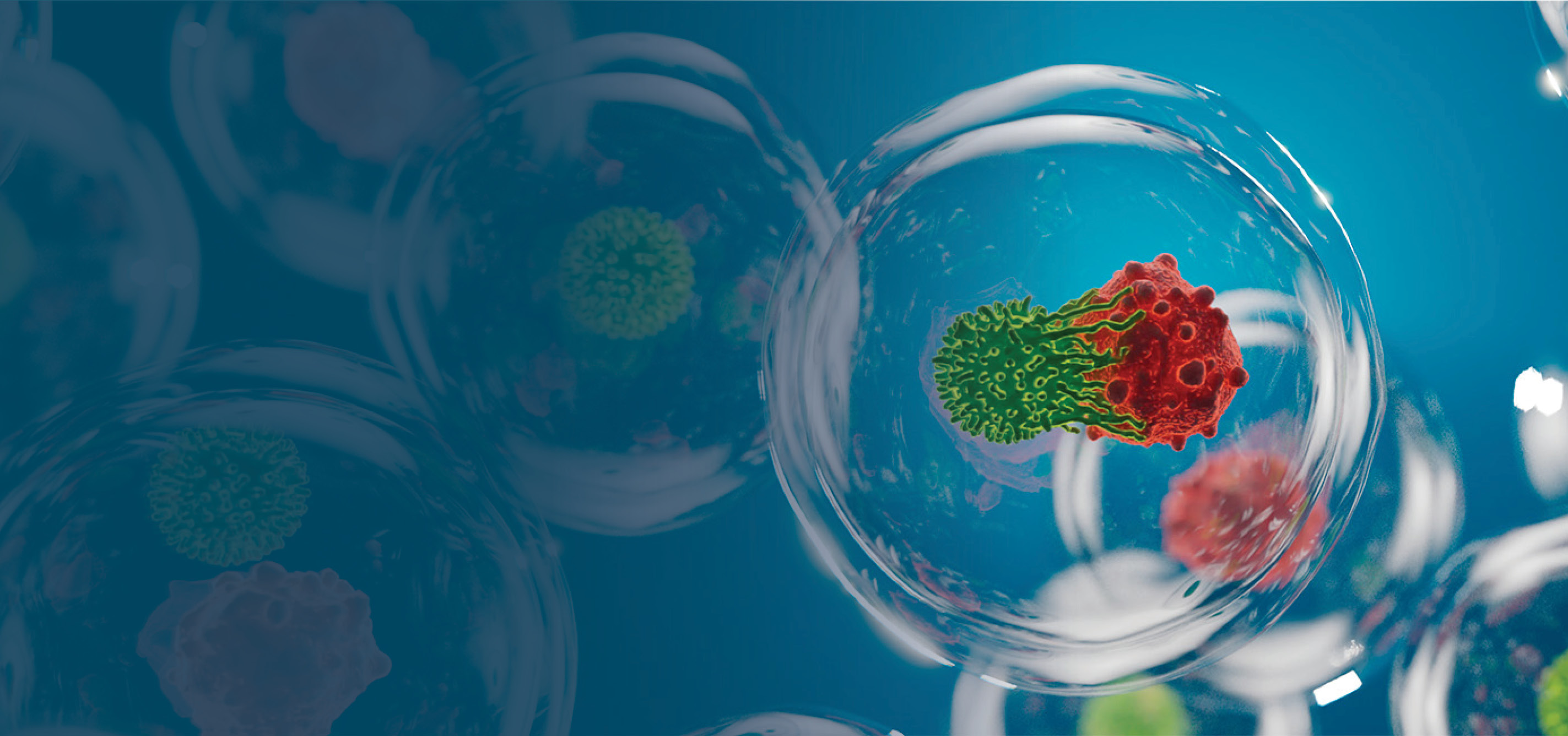
Droplet microfluidics allows the encapsulation of individual cells in picoliter-volume droplets, effectively turning each droplet into a miniature reaction vessel. By integrating these droplets with flow cytometry systems, traditionally designed for aqueous cell suspensions, researchers can now measure cell activities, sort rare populations, and link phenotypes to genotypes at the single-cell level level while preserving cell viability (Li et al., 2021).
Unlike conventional water-in-oil droplets, double-emulsion droplets with an aqueous outer phase are compatible with flow cytometry and can be analyzed and sorted using standard instruments. This integration enables functional interrogation of single cells while preserving the throughput and analytical robustness of flow cytometry (Li et al., 2021).
The integration of droplet microfluidics with flow cytometry supports a broad range of applications, including:
Together, these applications illustrate how droplet flow cytometry enables function-first single-cell analysis, combining high sensitivity and throughput to access cellular activities that are not accessible with conventional marker-based approaches.
Droplet flow cytometry doesn’t just expand what’s possible, it also integrates seamlessly with existing technologies. For example, Samplix’s DE droplets are compatible with most flow cytometers, providing researchers with an accessible platform for advanced single-cell studies.
By combining the analytical power of flow cytometry with the compartmentalization enabled by droplet microfluidics, droplet flow cytometry shifts single-cell analysis toward function-first interrogation. This approach enables high-throughput, sensitive assays that capture what cells do, not only what they express.
Share this article